On Miro's Content Caliber
The word “Miro” is inspired by a Spanish artist, Joan Miro who painted with striking colors, much more resembling the motif of what Miro stands for. Barbra Gago mentioned Brand Sprint on Miro’s rebranding study which gives us an in-depth idea of the “why” factor that any amount of dreaded pressure and hustle to reintroduce a brand is worth every penny and sweat!
Year
2022
Services
Case Study

THE WINDOW TO MIRO’S CONTENT STRATEGY : A GUIDE TO ACE THE SAAS GAME
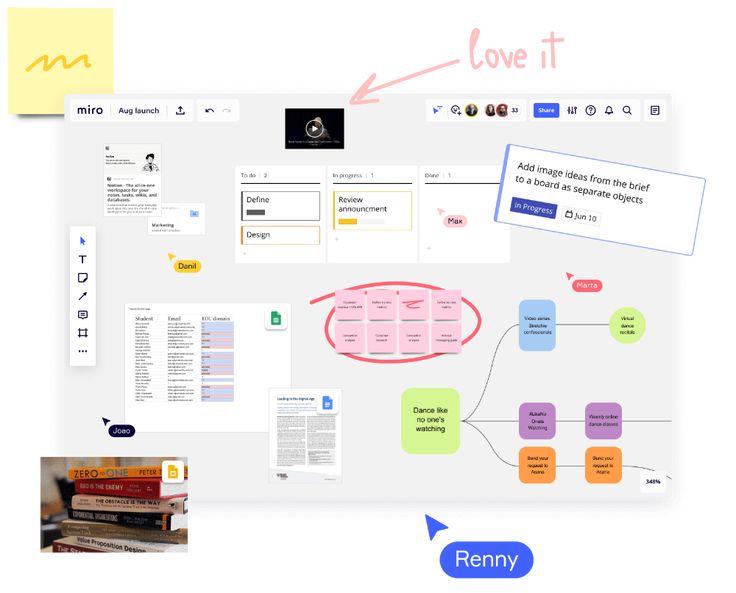
The possibility of a virtual whiteboard to change the course of remote work has never been this impressive. If you have been a part of a team project in the B2B world, Miro is no amateur’s charm for you. Miro is a digital whiteboard tool which allows you to collaborate and brainstorm your innovation with your team. You can engage in interactive meetings, get your vision board connected with your teammates, map your customers’ feedback and illustrate your concepts on a whiteboard - all of it through Miro.
With a seemingly 60% decrease in engagement and estimated 250% increase in time invested in meetings and inductions, the inevitable disadvantages of working in a remote setting has been a challenge for companies. Especially with the new “loungewear at your couch-cum-cabin” office concept, since the pandemic, business organizations, private enterprises and educational premises have accepted virtual reality like never before. Incoming mass of resignations up to 4 millions and migration of employees to find their comfort in work from home jobs did hype the SaaS Industries who were quick enough to make the decision of adapting this new work environment. And, Miro found its place to navigate the teams to perform their business with no obstacles
MIRO’S TARGET AUDIENCE
Amassing a total of 35 million users across the globe, Miro takes the bait on every possible corner of marketing to give us cost effective, adaptable and flexible collaborative software. According to FoundationInc, collaborative whiteboard space Miro is the undisputed SaaS leader in . Whether your goal is to host a creative meeting in agile culture or direct a mind mapping of an innovative workshop, Miro is the place to go. Miro is a genie rub to any dream team across the globe including, Project Managers, UX startups, Developers, Product Marketers, Entrepreneurs, Consultants, HRs, Enterprise Marketers, Sales Agencies, Engineers So far, Miro has managed to allocate itself to wider audiences with features that do not limit itself to brainstorming or creating notes. Miro gives its users ease of app integration with apps like Google Drive, Trello and Slack. Not to forget, the enhanced UX research and design along with customisable project templates to give your project the desirable edge that it deserves.
BODYING THE MIRO : BRANDING AND PERSONIFICATION
Miro symbolizes visual expression, experimentation, and work that transcended borders and impacts many .
-ANDRE KUSHID, CEO OF MIRO.
Andre Kurshid, the Founder and CEO of Miro, created Miro in 2011. With 11 years of its foundation, Miro has evolved itself from a whiteboard space startup to accommodating an approximate 95% of FORTUNE100 companies. Miro was originally named as RealTime Board. On Miro’s blog, Khusid, the man behind Miro, talks about rebranding and gives quick insight on the origin of its new name. As direct and blunt RealTime Board was, Kushid and the team were looking for a name which can connect the customers on an emotional level. In Kushid’s own anecdote, he wrote, “Inspired by our customers—the movers and shakers of the world—we decided it was time to develop our brand into something that helps our vibrant community align around a bigger aspiration.”
The word “Miro” is inspired by a Spanish artist, Joan Miro who painted with striking colors, much more resembling the motif of what Miro stands for. Barbra Gago mentioned Brand Sprint on Miro’s rebranding study which gives us an in-depth idea of the “why” factor that any amount of dreaded pressure and hustle to reintroduce a brand is worth every penny and sweat! In a blend of Stratos blue and Oxford blue, the logo of Miro is embellished on a Sunglowy yellow background. The symbol of Miro (three arrows making ‘M’), in Stratos, shows the connectivity and support of a team which belongs to a diverse space of culture and ideas.
MIRO.COM
Looking through the user experience, what Miro tackles is what Miro brands. As of 2022, startup companies like Neuro, GlamBook and Sticker4Life are shaping a new alignment for Miro. One of the main reasons as to why newer startups are preferring Miro is because of its unique approach to define and market its features by giving the outlook of a friendly aesthetic visuals and media. Any business needs to have a web design which serves the purpose of building a community of users. For this, order and positioning of features in a website is very important. Miro’s website serves strategic UX design psychology, bewitching its audience A clean design with artistic illustrations and bold taglines, Miro’s homepage is a billboard of call-to-action. Miro has an effortless design to keep you scrolling and intrigued. Without having to drift away from the branding theme, it uses high contrasting color palettes to prompt users’. Miro also has an easy sign up process requiring minimum personal data for registration. MiroVerse, Miro Community and Miro Academy are there for you like a transparent sticky note to add to your whiteboarding skills. For starters in a hyper growth industry, competition and compatibility comes as a first step. If you are a fresher, getting started with your business, Miro has Miro For Startups and Miro Experts Directory.
GIVE ‘EM SOMETHING TO TALK ABOUT
Think about your business that needs to get the talk of the town in order that it can converge “mind dumps” of different kinds of people and allow them to access your business services. Now, if you are living in the SaaS generation of the 21st Century, the key ingredient is to prioritize customer experience. Miro Community adds to the content marketing strategy of Miro. Miro is making sure that the customer dictates its visual power to the stickies. For this, Miro Community brings millions of users to one segment where you get to be with like-minded groups of people who inspire you and more importantly, give peer reviews to your creative designs. Miro Community lets its fanbase drop the word related to the whiteboard. There is a leaderboard which ranks community members who actively contribute to the Miro Community. Miroversity forum is a subpage of the Miro community where Miro aficionados unite to vibe in the SaaS whiteboard space. Miro even takes it one step further by adding a wishlist to drop your wildest ideas and features that you would like to see come true on this tool. And before you think “ain’t a B2B community boring?”,Miro enthusiasts have an entire meme universe, Agile memes, waiting for you. This has helped Miro to channel a rather effortless relationship with its customers and evolve its brand personality through the roof with a growth rate of over 600%.
PRAISE THE MIRO MARKETING TEAM
What the best marketing teams in the world can tell you about Marketing is never going to be read through a web of grails : Keep it simply dynamic. Miro knows it the best. For any startup in an agile work culture, the web traffic is one damned heckler. It is a scoreboard which tells you whether you are aware of your brand or not. This is where Miro scores with flying colors. An estimated 80% of web traffic on Miro has a direct incoming path. Miro highlights the term “collaborative” and sticks by it to bring the change in the remote-hybrid environment. Miro’s own rebranding is a product of a creative collaboration which they have used for their PR marketing purpose. (*Spell GENIUS in all caps.*) For a B2B SaaS launch, Miro is an ideal example of a powerhouse of content generated by users and how bigger the impact can go by prioritizing the space for users to resource their ideas to the tool they have used. A transparent liaison of feedback is received by Miro’s team and much to an applaudable effort, the BTS at Miro works on its users’ introspection, flaunting a hefty 92% of CSAT. from its customers.
MIROGRAM
Majority of B2B companies on social media platforms come out to be one dimensional directory of marketing features with uptight captions and limited inventive space. Companies often restrain themselves from fully utilizing their Instagram. 90% of Instagrammers follow business accounts and with recent growth in SaaS startups fueling a new tone of marketing tactics, it has become mandatory to give your business its own “Gram ID”. In fact, GenZers are molding the B2B industry not just by creating an identifiable aesthetic for visibility and engagement, but by acting their instagram as a creative journal to give their audience a window to peek into the raw process.
Unlike a lot of software companies that sound all corporate, Miro's Instagram is artsy and lively, like their goal: to get everyone creating. They don't just put up boring templates or tech stuff; they tell stories with cool visuals. You'll see sketches, pics of workspaces, teams all over the world working together, and shout-outs to users instead of just pushing their product. Their videos and stories show off their culture—like how teams work remotely, design stuff, and use quick, cool visuals to show how things work. This people-first way makes Miro friendly and gets people feeling something for them online.
Even the colors they use online fit their look. That bright blue and sunny yellow? They use them as cool textures that make you think of getting stuff done and feeling good. Miro's captions are simple and easy to talk to, with some fun, learning, and inspiration mixed in. So, it feels like you're working with a creative buddy, not just using software.
They also get their users involved a lot. They ask people to tag their Miro creations and share their boards of the week, so their fans become their biggest supporters. It builds trust and gets them noticed, which most software brands can't do as well on a personal level. With Mirogram, Miro changed how these tools talk to people—making it visual, fun, and something you remember.
WHAT'S BEHIND THEIR STUFF: MIRO'S PLAN
Miro's content works well because it mixes learning with feeling. They don't just sell a tool; they sell a change: how teams can work better, see ideas faster, and not let distance get in the way of being creative. Here's how they keep that going:
Teaching stories:
They have talks with experts and blog posts on making creativity real (How to run better retrospectives). Miro wants you to learn, not just buy.
Product helps it grow:
The free Miro version isn't just a sample; it's a door opener. Once people try how easy it is to work together, upgrading feels natural, not like they're being pushed.
Being a leader:
Miro puts out reports and stories that show how people use it in real life—like agile design, brainstorming, and reviews—all on their whiteboard system. This makes tech stuff easy to get for both startups and big companies.
Everywhere you look:
Miro sounds the same but fits in on LinkedIn, YouTube, and their blog. Instagram makes you know their style, and LinkedIn shows why they're good through success stories.
Miro's content plan is like a sprint—fast, always changing, and focused on what users see. Their marketing and community teams work with teachers and creators, so it feels real, not just like ads.
CREATIVE WORKING TOGETHER: STANDING OUT
In the software world, where top brands fight for being useful, Miro fights for having a vision. They don't just want to be a tool; they want to be a place where visual thinkers find what they need. They sponsor events where people come up with ideas, showing what can happen when creativity is shared.
With Miroverse—a place where people share templates—they turned what users know into content. It's people helping people. Designers, engineers, teachers can show their whiteboards, which makes Miro look good and gets the community involved.
Miro also tells stories,showing what users do. They have interviews, videos, and stories, showing how real it is to work together online. This makes people think about the effect on people, not just the tool. Miro is also open about what they do. They share product changes, have talks with designers, and explain new stuff, so users feel like they're part of it, not just customers. This makes them stay longer—people stick with a brand that listens.
AI AND USING DATA
By 2025, Miro started using AI in their tools. Miro Assist lets teams sum up insights, make action items, and create diagrams from words. This made Miro a leader in working together smarter.
Their marketing presents these AI things as making creativity better, not replacing it. In blogs and videos, Miro shows how people and AI can work together—mixing tech with understanding.
They also use data to see how people use their stuff. Miro sees which templates are saved or changed the most, so they can make better campaigns and learning stuff. This helps them change their plan based on what people do.
WHAT SOFTWARE MARKETS CAN LEARN
Miro shows how to make a software brand that really hits home: Sell with feeling, keep with sense. Miro gets you with creativity and community, then keeps you with how well it works.
Design = who you are.
Everything you see—from the logo to the website—is there to teach you something. Looks and function come together, so you remember it.
Community = content.
Miro doesn't just shout; it gets ideas from its people. This makes users part of the brand, not just customers.
Be open and teach. By giving away knowledge (talks, templates, courses), Miro turns knowledge into loyalty.
New things that matter. The brand changes in ways you can see—AI, design, community—all based on what users need.
For new software brands, Miro shows that being popular is less important than being seen with value. It's not about getting lots of likes; it's about making experiences that turn people into fans.
CLOSING CANVAS
The great thing about Miro's content is how well it mixes creativity and planning. It doesn't yell about tech; it tells stories about working together. Software competitors focus on being techy, but Miro focuses on people, making itself the place where imagination happens.
Miro changed how we think about getting things done—making it visual, social, and human. The way to see its content plan is clear: let users help you tell your brand's story. Because when your customers tell your story, your brand doesn't need ads—it becomes a movement.

